Introduction
Few vehicles have left as lasting an impact on the Indian automobile market as the Renault Duster. When it arrived in 2012, the SUV changed consumer perception by offering rugged styling, excellent ride quality and genuine SUV capability at a time when the segment was still in its infancy. Long before the Hyundai Creta, Kia Seltos or Maruti Grand Vitara became household names, the Duster had established itself as the benchmark for affordable urban SUVs.
However, increasing competition, evolving customer expectations and stricter emission norms gradually pushed the Duster out of the Indian market. Renault discontinued the model in 2022, leaving behind a loyal customer base that had long hoped for its return.
Now, after several years, Renault has brought back the Duster in an entirely new avatar. The 2026 Renault Duster is not a facelift or a cosmetic update—it is a completely redesigned SUV developed on a new platform with modern styling, advanced technology, improved safety features and new powertrain options. More importantly, the new Duster represents Renault's renewed strategy to strengthen its position in one of the world's most competitive automobile markets.
The Legacy of the Duster in India
The original Renault Duster played a defining role in shaping India's SUV market. At a time when buyers were largely choosing sedans and hatchbacks, the Duster introduced the idea of a practical monocoque SUV that combined comfort with capability.
Its high ground clearance, durable suspension setup and reliable diesel engine made it equally suitable for city roads, highways and rough rural terrain. It appealed not only to urban buyers but also to customers looking for a vehicle that could comfortably handle India's diverse road conditions.
Although newer rivals gradually introduced more premium interiors and connected technologies, the Duster continued to enjoy a strong reputation for its driving dynamics and durability. Even after production ended, the SUV retained a loyal following, making its comeback one of the most anticipated launches in recent years.
A Completely New Design Language
The 2026 Duster has undergone a complete transformation in terms of design while retaining the rugged personality that made it popular.
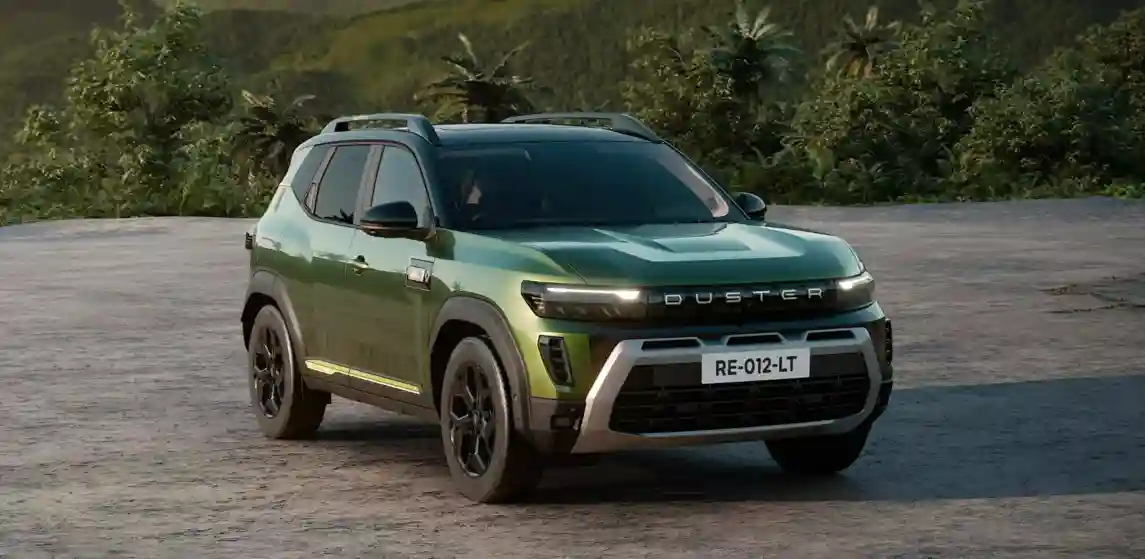
Built on the Renault-Nissan Alliance's latest CMF-B platform, the SUV features a sharper and more muscular exterior. The front fascia is dominated by a larger grille carrying Renault's updated logo, flanked by distinctive Y-shaped LED daytime running lights and sleek LED headlamps.
The squared wheel arches, pronounced body cladding, sculpted bonnet and silver skid plates reinforce the SUV's robust appearance. Unlike many crossovers that prioritise style over functionality, the Duster continues to project itself as a practical SUV designed for varied driving conditions.
At the rear, the SUV receives redesigned LED tail lamps, a revised bumper and a cleaner tailgate design that gives it a more premium and contemporary look.
The increased dimensions also contribute to a stronger road presence while improving cabin space.
Interior Receives the Biggest Upgrade
If the previous-generation Duster was often criticised for one aspect, it was the cabin. Renault has addressed that criticism comprehensively in the new model.
The dashboard has been completely redesigned with a more driver-focused layout and significantly improved material quality. Soft-touch surfaces, better fit and finish and a cleaner dashboard design give the cabin a more premium feel.
At the centre sits a large floating touchscreen infotainment system, while a fully digital instrument cluster replaces the analogue gauges of the outgoing model.
The new Duster also introduces several premium features that were absent in the earlier version. Depending on the variant, buyers can expect wireless Android Auto and Apple CarPlay, wireless phone charging, automatic climate control, a panoramic sunroof, connected car technology, ambient lighting, ventilated front seats and electrically adjustable seats.
Rear seat comfort has also improved with increased legroom, better cushioning and enhanced practicality through additional storage spaces.
Engine Options and Performance
Renault has expanded the Duster's powertrain lineup to cater to a wider range of customers.
Globally, the SUV is available with multiple petrol and hybrid engine options, and similar powertrains are expected for the Indian market.
The entry-level model is likely to feature a 1.0-litre turbocharged petrol engine designed for everyday city driving while delivering improved fuel efficiency.
For buyers seeking stronger performance, Renault is expected to offer a more powerful 1.3-litre turbo-petrol engine paired with manual and automatic transmission options. This engine is expected to provide quicker acceleration and better highway performance.
One of the biggest additions to the new-generation Duster is the introduction of a strong hybrid powertrain in global markets. Combining a petrol engine with electric motors, the hybrid system is expected to improve fuel economy while reducing emissions. Industry experts believe Renault may introduce the hybrid version in India at a later stage, depending on market demand.
Ride Quality Continues to Be the Duster's Biggest Strength
One area where the Duster consistently outperformed many rivals was ride comfort, and Renault appears determined to preserve that advantage.
The SUV continues to feature a suspension setup designed to absorb rough roads with ease while maintaining stability at highway speeds. Combined with generous ground clearance, the Duster remains well suited for Indian road conditions, including broken roads and occasional off-road trails.
The new platform also promises improved structural rigidity, resulting in better handling, reduced cabin noise and enhanced overall driving dynamics.
For buyers who prioritise driving comfort over flashy features, this remains one of the Duster's strongest selling points.
Safety Gets a Major Boost
Safety has become one of the biggest differentiators in today's SUV market, and Renault has significantly upgraded the Duster in this area.
The SUV is expected to offer six airbags, Electronic Stability Program (ESP), traction control, hill start assist, hill descent control, tyre pressure monitoring system, electronic parking brake and a 360-degree camera.
The biggest highlight, however, is the introduction of Advanced Driver Assistance Systems (ADAS) in higher variants. These include features such as adaptive cruise control, autonomous emergency braking, lane departure warning, lane keep assist, traffic sign recognition and driver attention monitoring.
These technologies place the new Duster alongside several premium SUVs that have already introduced ADAS features in India.
Technology and Connected Features
The 2026 Duster reflects changing customer expectations by offering a significantly more connected driving experience.
The infotainment system supports smartphone connectivity, voice commands, navigation and over-the-air software updates. Connected car features allow owners to remotely monitor vehicle health, track location, receive maintenance alerts and access selected vehicle functions through a mobile application.
Multiple USB charging ports, wireless charging and premium audio options further enhance the cabin experience, making the SUV more competitive against newer rivals.
Manufacturing and Renault's India Strategy
The return of the Duster is central to Renault's long-term strategy for India.
The company has identified India as one of its priority growth markets and plans to strengthen its presence through greater localisation, new product launches and increased exports.
The new Duster is expected to be manufactured at Renault Nissan Automotive India's facility in Chennai with a high degree of localisation. This is expected to help Renault maintain competitive pricing while reducing dependence on imports.
India is also likely to serve as an export base for several right-hand-drive markets, strengthening the country's role in Renault's global manufacturing network.
Competition in an Intensely Competitive Segment
The market that the Duster returns to is significantly different from the one it left.
The mid-size SUV segment has become one of the most competitive in India, with established players offering feature-rich products equipped with advanced technology and multiple powertrain options.
The new Duster will compete against models such as the Hyundai Creta, Kia Seltos, Maruti Suzuki Grand Vitara, Toyota Urban Cruiser Hyryder, Honda Elevate, Volkswagen Taigun, Škoda Kushaq, MG Astor and Tata Curvv.
Unlike many of its competitors, Renault appears to be positioning the Duster as a balanced package that combines rugged capability with modern technology rather than focusing exclusively on urban styling.
Market Expectations
Industry analysts believe the Duster's return could strengthen Renault's position in India, provided the company succeeds in competitive pricing and after-sales support.
The SUV enters a market where customer expectations have evolved considerably. Buyers today expect premium interiors, connected technology, strong safety credentials and multiple engine options alongside attractive pricing.
While the Duster enjoys strong brand recall, its success will depend on how effectively Renault balances its traditional strengths—ride quality, practicality and durability—with the premium features now expected in the segment.
Conclusion
The 2026 Renault Duster marks far more than the return of a popular SUV. It represents Renault's attempt to rebuild its presence in India's rapidly evolving automobile market through a product that combines its proven strengths with modern technology and design.
The SUV retains the rugged character that earned it a loyal following while introducing improvements across every major area, from styling and interiors to safety, connectivity and performance. As competition in the mid-size SUV segment continues to intensify, the Duster's comeback is expected to be closely watched by both industry observers and consumers.
Whether it can recreate the success of the original model remains to be seen, but its return undoubtedly adds another strong contender to one of the fastest-growing segments in the Indian automobile market.
Video: YT/@RenaultIndia
Video: YT/@RenaultIndia