


Four Stars of Destiny: The Autobiography of General Manoj Mukund Naravane

Four Stars of Destiny is the autobiography of Manoj Mukund Naravane, the former Chief of the Indian Army. The book offers a detailed account of Naravane’s personal life, military career, leadership experiences, and the strategic challenges he faced during his decades of service in the armed forces. The memoir traces his journey from his early years and training as a young cadet to eventually becoming the 28th Chief of the Indian Army, a position he held from December 2019 to April 2022.The book is considered an important narrative of modern Indian military leadership, providing readers with insights into the functioning of the Indian Army, strategic decision-making at the highest levels, and the complexities of managing national security challenges in the twenty-first century.About the AuthorGeneral Manoj Mukund Naravane was born on 22 April 1960 in Pune, Maharashtra. He comes from a family with a background in public service—his father served as an officer in the Indian Air Force while his mother worked with All India Radio. Naravane received his education in Pune before joining the National Defence Academy and later the Indian Military Academy, where he began his professional military journey.He was commissioned into the 7th Battalion of the Sikh Light Infantry in June 1980, beginning a career that would span more than four decades. Over the years, he served in a wide range of operational, command, and staff roles across India and abroad. His service included counter-insurgency operations in Jammu and Kashmir and the Northeast, as well as participation in the Indian Peace Keeping Force in Sri Lanka.These experiences shaped his leadership style and strategic understanding, themes that are extensively discussed in his autobiography.Journey from Cadet to Army ChiefA central theme of Four Stars of Destiny is Naravane’s professional journey through the ranks of the Indian Army. The memoir describes how discipline, training, and operational experience helped shape his character and leadership philosophy.The book recounts his early days as a young officer and his exposure to challenging military environments. It highlights how officers are trained to make difficult decisions under pressure while maintaining responsibility for the lives of their soldiers.Naravane gradually rose through the ranks, commanding various units and formations and holding several senior positions in the Indian Army. His leadership roles included command of an infantry brigade, senior operational responsibilities in counter-insurgency areas, and high-level appointments in the defence establishment.Eventually, he rose to become the Chief of the Army Staff, the highest position in the Indian Army. His tenure as army chief coincided with several significant national security developments and military challenges.Insights into Military LeadershipOne of the key aspects of the memoir is its discussion of leadership and decision-making in the armed forces. Naravane reflects on the values of discipline, professionalism, and responsibility that define military leadership.Through personal anecdotes and experiences, he explains how officers must balance strategic planning with ground-level realities. The book also explores the importance of teamwork, trust within the chain of command, and the ethical responsibilities associated with leadership in the military.The memoir also offers lessons on management and leadership that extend beyond the armed forces, showing how military principles such as preparedness, resilience, and clarity of command can be applied in other professional fields as well.Key Military Events Discussed in the BookFour Stars of Destiny also provides an insider’s perspective on several important security developments that took place during Naravane’s career.Among the most significant is the India-China military standoff in eastern Ladakh in 2020, one of the most serious confrontations between the two countries since the 1962 war. The memoir discusses the strategic decisions taken by the Indian military leadership during the crisis and the measures implemented to manage tensions along the Line of Actual Control (LAC).The book also touches upon other policy and organisational changes within the armed forces, including reforms related to recruitment and military preparedness.Publication and ControversyAlthough the memoir was originally scheduled for publication in 2024 by Penguin Random House India, its release has been delayed due to the review process required for books written by former senior military officials.In India, manuscripts written by senior defence personnel often undergo scrutiny by the Ministry of Defence before publication to ensure that sensitive information related to national security is not disclosed.The book also became the subject of political debate in Parliament after excerpts from the manuscript were cited during discussions on national security issues. This controversy brought renewed public attention to the memoir even before its official release.Significance of the MemoirDespite the publication delays, Four Stars of Destiny has generated considerable interest among readers, military analysts, and policymakers. The memoir is expected to provide valuable insights into the workings of India’s military leadership and the challenges faced by the armed forces in an evolving geopolitical environment.More than just a record of personal achievements, the book is also seen as a reflection on the values and responsibilities associated with serving in the armed forces. It highlights how decades of dedication, discipline, and leadership can shape both an individual career and the broader institution of the military.ConclusionFour Stars of Destiny stands as an important account of the life and career of General Manoj Mukund Naravane. By narrating his journey from a young cadet to the head of the Indian Army, the autobiography provides readers with a deeper understanding of military service, leadership, and national security.The memoir not only documents a distinguished military career but also offers lessons on perseverance, duty, and leadership—qualities that remain central to the ethos of the Indian armed forces.
Delhi–Meerut RRTS Fully Operational: India’s First Regional Rapid Transit Corridor Becomes a Reality
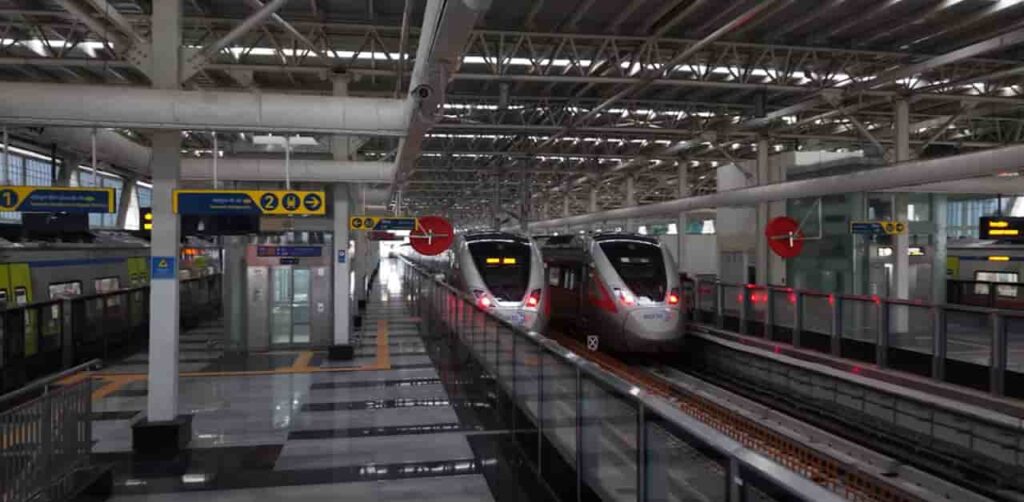
In a major milestone for India’s urban transport infrastructure, the full stretch of the Delhi–Meerut Regional Rapid Transit System (RRTS) has now been opened for public operations. Developed by the National Capital Region Transport Corporation (NCRTC), the corridor marks the country’s first semi-high-speed regional rail system, designed to significantly reduce travel time between Delhi and key cities in western Uttar Pradesh.The corridor connects Delhi, Ghaziabad, and Meerut, transforming daily commuting across the National Capital Region into a faster, more efficient experience.A High-Speed Alternative to Road TravelThe Delhi–Meerut RRTS corridor spans approximately 82 kilometres, making it one of the most advanced regional rail projects in the country. With trains designed to operate at a maximum speed of 180 km/h and an operational speed of around 160 km/h, the system drastically cuts down travel time.Commuters can now travel between Delhi and Meerut in less than one hour, compared to the earlier duration of over two to three hours by road, depending on traffic conditions. This is expected to ease congestion on highways and reduce dependence on private vehicles.Modern Stations and InfrastructureThe corridor includes over 20 strategically located stations, covering major residential, commercial, and transit hubs along the route. Key stations include:Sarai Kale Khan (Delhi)Anand ViharGhaziabadModinagarMeerut SouthMeerut CentralThese stations are equipped with modern facilities such as:Platform screen doorsAutomated ticketing systemsEscalators and elevatorsSeamless integration with metro and bus networksThe infrastructure has been designed keeping in mind accessibility, safety, and passenger comfort.Advanced Technology and Passenger ExperienceThe RRTS introduces a new standard of rail travel in India, combining speed with technology-driven convenience.Trains on the corridor are fully air-conditioned and feature:Ergonomic seatingDedicated luggage spaceOnboard information systemsWi-Fi connectivityCCTV surveillance for securityA separate premium coach has also been introduced, offering business-class-like seating and additional comfort for passengers willing to pay a higher fare.Integration with Urban Transport NetworksOne of the key advantages of the RRTS is its integration with existing urban transit systems. Stations such as Anand Vihar and Sarai Kale Khan connect with metro lines, railway stations, and bus terminals, enabling seamless last-mile connectivity.This multimodal approach is expected to encourage greater use of public transport and reduce traffic congestion in the region.Economic and Regional ImpactThe full operationalisation of the Delhi–Meerut RRTS corridor is expected to have far-reaching economic implications.Improved connectivity will:Boost real estate development along the corridorFacilitate faster movement of workforce between citiesEncourage business expansion beyond DelhiSupport balanced regional development in NCRCities like Ghaziabad and Meerut are likely to witness increased investment and urban growth as commuting becomes more convenient.Environmental BenefitsBy providing a fast and reliable alternative to road travel, the RRTS is also expected to contribute to environmental sustainability.Reduced vehicular traffic will lead to:Lower carbon emissionsDecreased fuel consumptionImproved air quality in the NCR regionThe project aligns with India’s broader goals of promoting sustainable and green mobility solutions.A New Era of Regional ConnectivityThe Delhi–Meerut RRTS is the first of several planned corridors under the regional rapid transit system network. Its successful implementation sets a benchmark for similar projects connecting other parts of the National Capital Region.With high-speed travel, modern infrastructure, and seamless connectivity, the corridor represents a significant leap in how intercity commuting is approached in India—bringing cities closer while improving quality of life for millions of daily commuters.
Government Announces 7 New Bullet Train Corridors in India: A Transformative Push for High-Speed Connectivity
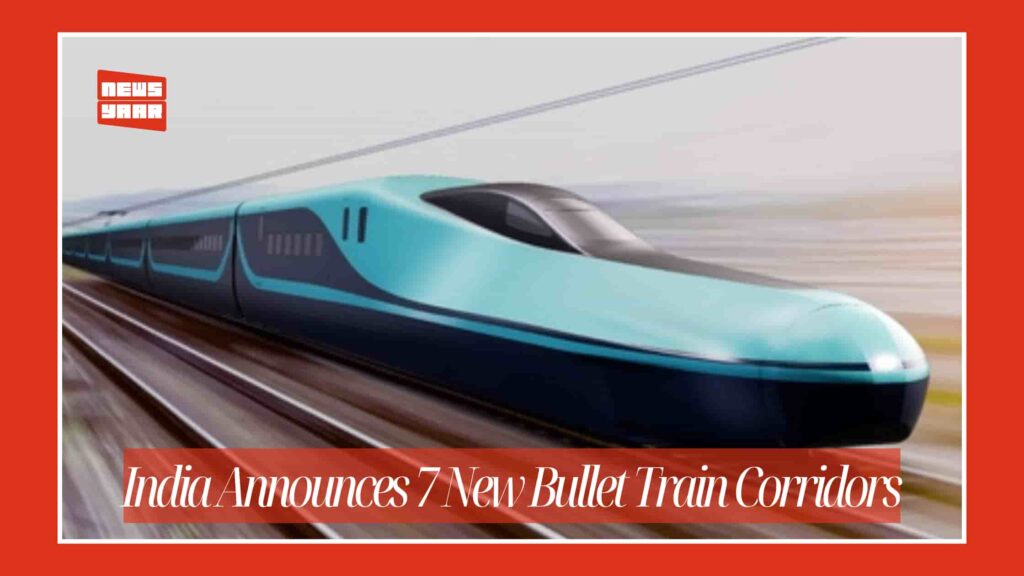
In a landmark expansion of India’s rail infrastructure, the Government of India has announced the development of seven new high-speed rail corridors — popularly referred to as bullet train routes — as part of the Union Budget 2026–27. The ambitious initiative aims to transform inter-city travel by significantly reducing travel times, boosting economic growth and enhancing connectivity between major urban and economic hubs across the country.Announcement and Policy ContextUnion Finance Minister Nirmala Sitharaman unveiled the corridors during her Budget 2026–27 speech in Parliament, categorising them as “growth connectors” that will promote environmentally sustainable passenger transport systems across India’s rail network. These high-speed corridors complement the Mumbai–Ahmedabad High-Speed Rail Corridor (MAHSR) — India’s first bullet train project — and build on the government’s broader infrastructure and mobility agenda.Railway Minister Ashwini Vaishnaw has confirmed that detailed preparations are underway, with Detailed Project Reports (DPRs) being finalized and pre-construction activities initiated through the National High Speed Rail Corporation Limited (NHSRCL). The government is focused on fast-tracking implementation and standardising high-speed rail system development nationwide.Proposed Bullet Train Corridors: Routes and ConnectivityThe announcement includes seven high-speed rail corridors that will link key cities and regions across India. These corridors are expected to span nearly 4,000 km and strategically connect major economic, industrial and cultural centres. The routes identified are:Mumbai–Pune High-Speed Rail Corridor — strengthening connectivity within Maharashtra’s economic belt.Pune–Hyderabad High-Speed Rail Corridor — linking western and southern economic hubs.Hyderabad–Bengaluru High-Speed Rail Corridor — a major southern technology and industry link.Hyderabad–Chennai High-Speed Rail Corridor — connecting southern metros with coastal economic zones.Chennai–Bengaluru High-Speed Rail Corridor — improving travel between two major southern cities.Delhi–Varanasi High-Speed Rail Corridor — enhancing northern connectivity with Uttar Pradesh’s cultural capital.Varanasi–Siliguri High-Speed Rail Corridor — extending high-speed reach toward eastern India and gateway regions.Collectively, these corridors aim to connect financial hubs, technology clusters, manufacturing centres and emerging cities with modern high-speed rail infrastructure.Strategic Goals and Economic RationaleGovernment officials have described the new corridors as not just transport projects but growth engines that will:Reduce travel times drastically between key city pairs (for example, a bullet train between Mumbai and Pune could reduce travel to under an hour), enhancing convenience and productivity.Stimulate regional economic development by creating linked urban-industrial corridors that attract investment, tourism and job creation.Support environmental sustainability by offering cleaner and more energy-efficient alternatives to road and air travel.Drive technology and manufacturing growth by enabling high-speed rail ecosystem development, including engineering, signalling, rolling stock and systems integration.Union Minister Ashwini Vaishnaw has emphasised that the initiative will contribute toward India becoming 100 per cent self-reliant (Atmanirbhar) in high-speed rail technologies, with a focus on leveraging indigenous manufacturing and innovation wherever feasible.Implementation and TimelineWhile the Mumbai–Ahmedabad corridor is already under construction and expected to begin phased operations starting 2027 for the Surat–Bilimora section and full completion by 2029, the new seven corridors are in the pre-construction and planning stage.Officials have indicated that preparation of DPRs, alignment finalisation, land acquisition and contract documentation will be prioritised over the coming months, with work expected to begin once these foundational studies are complete. Dedicated field teams for each corridor will support expedited project execution.Broader Impact on Indian Railways and MobilityThe seven new bullet train corridors represent a shift toward world-class rail mobility in India, aligning with global best practices in high-speed transportation. Once operational, these corridors are expected to:Enhance national connectivity across key economic belts in the west, south, north and east.Reduce congestion on existing air and road networks by providing faster, reliable alternatives.Boost tourism by enabling easy access to major cultural and heritage destinations.Encourage urban transformation through transit-oriented development along high-speed rail alignments.Looking Ahead: A New Era of Rail TravelThe announcement of seven additional bullet train corridors marks a transformational phase for Indian Railways, moving the nation closer to a widespread high-speed rail network that complements existing infrastructure and accelerates economic integration. By linking metropolitan centres and regional hubs with modern, efficient rail travel, the government aims to redefine mobility in India and position the country as a global leader in high-speed rail development.Summary of the New Bullet Train CorridorsRouteRegionStrategic RoleMumbai–PuneWestEconomic mobility in MaharashtraPune–HyderabadWest–SouthIndustrial and technology linkageHyderabad–BengaluruSouthConnects major IT & innovation hubsHyderabad–ChennaiSouthCoastal economic corridorChennai–BengaluruSouthSouthern metro connectivityDelhi–VaranasiNorthLinks capital with cultural heartlandVaranasi–SiliguriNorth–EastGateway to eastern region
India’s DHRUV64: The First 1 GHz, 64-Bit Dual-Core Microprocessor

In a landmark moment for India’s semiconductor ambitions, the Centre for Development of Advanced Computing (C-DAC) has unveiled DHRUV64, the country’s first 1 GHz, 64-bit dual-core microprocessor.Developed under the government’s Microprocessor Development Programme and showcased as part of the Digital India RISC-V (DIR-V) initiative, DHRUV64 represents a major stride toward self-reliance in advanced chip design and computing technology. A Milestone in Indigenous Chip DesignDHRUV64 is built on an open-source RISC-V architecture, an increasingly popular set of instructions that allows chip designers to innovate without costly licensing fees from foreign companies.Operating at a clock speed of 1.0 GHz with dual processing cores and 64-bit capability, it brings India into the realm of gigahertz-class embedded processors, a class previously dominated by global players.Unlike earlier academic or specialised chips, DHRUV64 is designed for broader strategic and commercial applications, including industrial automation, automotive electronics, 5G infrastructure, consumer devices, and Internet of Things (IoT) systems. It supports modern operating systems, integrates with diverse hardware systems, and provides multitasking efficiency suited for a range of real-world deployments. How Does It Matter?India currently consumes roughly 20 percent of the world’s microprocessors, yet historically has relied heavily on imports for core computing technology.Developing a homegrown processor like DHRUV64 is significant not only for technological sovereignty but also for enhancing security, reducing supply-chain vulnerabilities, and building local expertise in semiconductor design.By creating a platform that domestic startups, researchers, and established companies can build upon, DHRUV64 is expected to boost innovation across the electronics ecosystem and support cheaper prototyping and product development.It also provides a foundation for a growing pipeline of skilled chip design professionals, further energising India’s tech sector.A Step Toward Aatmanirbhar Bharat in TechnologyDHRUV64 marks a continuation of India’s journey toward an Aatmanirbhar (self-reliant) semiconductor ecosystem. The chip follows earlier indigenous designs such as SHAKTI, AJIT, VIKRAM, and THEJAS64, and sits alongside future variants like Dhanush and Dhanush+ in the development pipeline.While India still relies on global fabrication technologies for manufacturing, the design and strategic deployment of processors like DHRUV64 signal a slow but steady shift toward autonomous capabilities in core computing technologies, a critical competitiveness marker in the global tech landscape.