
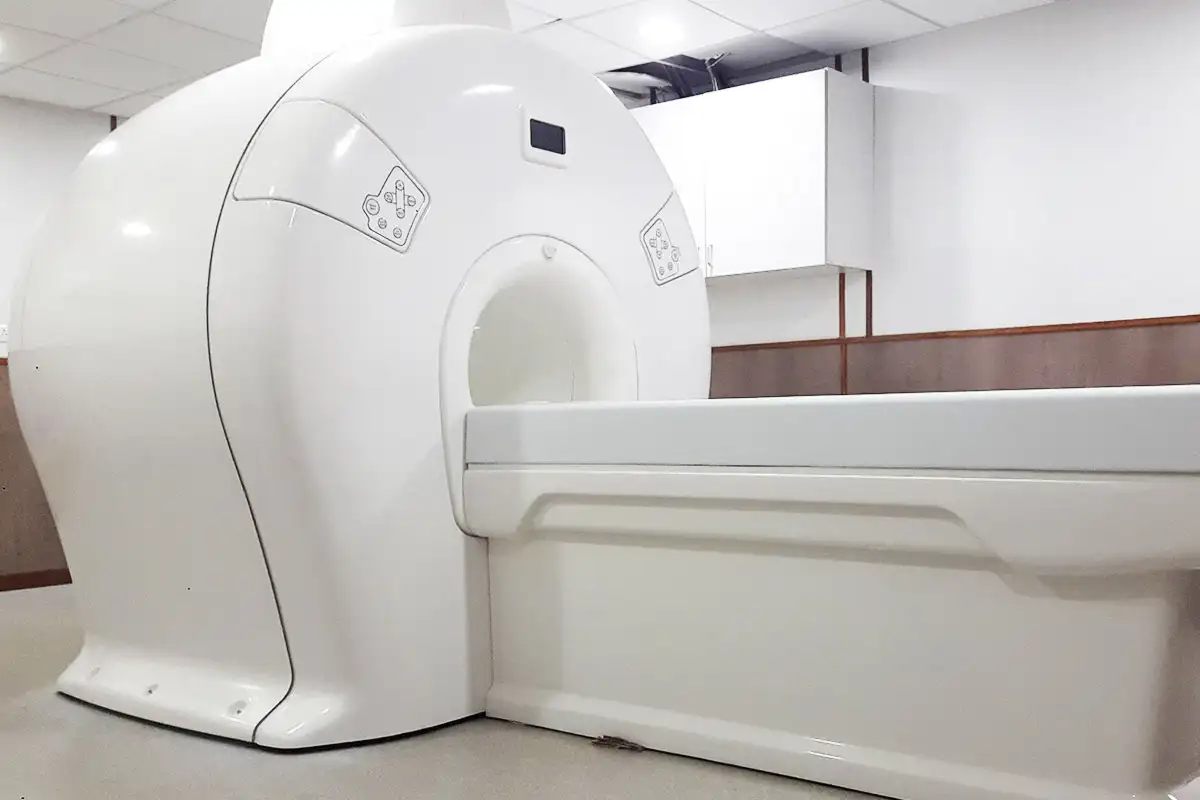
In a major milestone for Made-In-India medtech, VoxelGrids, a Zoho-backed start-up, has developed the country's first indigenous MRI (Magnetic Resonant Imaging) scanner, deploying it at Chandrapur Cancer Care Foundation near Nagpur as the culmination of a 12-year mission by Founder Arjun Arunachalam and his team to domestically design and build an MRI system, a critical diagnostic tool for hospitals that currently relies almost entirely on imports. The scanner, with a Magnetic Field Strength of 1.5 tesla, is not just a locally made version of MRIs from global giants like Siemens or GE HealthCare but comes with its own technological advancements, with VoxelGrids' MRI scanners, due to the absence of liquid helium, being around 40 per cent cheaper to build, transforming how India accesses critical diagnostic technology.
The 12-Year Journey: From Arjun Arunachalam's Vision to Chandrapur Cancer Care Deployment
VoxelGrids' founder Arjun Arunachalam embarked on a 12-year mission to domestically design and build an MRI system, spending years perfecting the technology that would finally deploy at Chandrapur Cancer Care Foundation near Nagpur, marking India's transition from complete import dependence to indigenous manufacturing capability. This critical diagnostic tool for hospitals, which currently relies almost entirely on foreign imports, has now become domestically available through VoxelGrids' innovation, with the 1.5 tesla magnetic field strength matching global standards while introducing technological advancements that differentiate it from traditional MRI systems.
The Zoho-backed start-up's success represents more than just technological achievement; it embodies the broader Made-In-India medtech movement that seeks to reduce India's dependence on foreign medical technology, with the deployment at Chandrapur Cancer Care Foundation demonstrating practical viability in real healthcare settings. The absence of liquid helium in VoxelGrids' MRI scanners, which makes them around 40 per cent cheaper to build, addresses one of the most significant cost barriers in MRI technology, potentially making critical diagnostics accessible to smaller hospitals and rural healthcare centers that previously couldn't afford foreign MRIs.
Indigenous Innovation: Beyond Copying Global Giants with Technological Advancements
The machine, with a Magnetic Field Strength of 1.5 tesla, is not just a locally made version of MRIs from global giants like Siemens or GE HealthCare but comes with its own technological advancements, distinguishing VoxelGrids' innovation from simple replication and positioning it as genuine technological breakthrough rather than import substitution. VoxelGrids' MRI scanners, due to the absence of liquid helium, are around 40 per cent cheaper to build, eliminating one of the most expensive and maintenance-intensive components of traditional MRI systems while maintaining diagnostic quality equivalent to global standards.
Liquid helium has traditionally been essential for cooling MRI magnets, requiring regular replenishment and specialized maintenance that adds high operational costs, but VoxelGrids' helium-free design eliminates this dependency while maintaining the 1.5 tesla magnetic field strength needed for high-quality imaging. This technological advancement represents genuine innovation rather than mere localization, positioning VoxelGrids as competitive with global giants while offering cost advantages that could democratize MRI access across India's diverse healthcare landscape.
Inter-University Accelerator Centre's Decade-Long MRI Magnet Development
Simultaneously with VoxelGrids' commercial success, New Delhi's Inter-University Accelerator Centre has been developing India's first indigenous MRI ecosystem through ten years of work by Indian scientists, with a life-sized stainless steel cylinder with a hollow centre sitting in a ground-floor room representing the coveted magnet of a Magnetic Resonance Imaging (MRI) machine conceptualized and developed by engineers at the centre. "We want to democratise MRI machines in India. Our Indigenous MRI project is not just about creating the technology, but also transferring it to industry and helping build a manufacturing ecosystem," said Rajesh Harsh, scientist at the Society for Applied Microwave Electronics Engineering and Research (SAMEER) and head of the Indigenous MRI (IMRI) programme, emphasizing the broader mission beyond technological creation.
The IMRI project, funded by the Ministry of Electronics and Information Technology (MeitY), aims to allow India to join the league of countries that manufacture the entire MRI machine ecosystem, as currently only a handful of companies across five countries—including China, Japan, Germany, the US, and the UK—manufacture the complete MRI ecosystem. Once completed, India will join this exclusive group, transitioning from import dependence to manufacturing capability that encompasses the entire MRI ecosystem rather than just individual components.
How 40% Cost Reduction Transforms Healthcare for Rural and Small Hospitals
The 40 per cent cost reduction in VoxelGrids' MRI scanners, achieved through the absence of liquid helium, has profound implications for democratizing MRI access in India, particularly for smaller hospitals and rural healthcare centers that previously couldn't afford foreign MRIs costing significantly more. Currently, only a handful of companies across five countries manufacture the entire MRI machine ecosystem, creating supply constraints and high costs that limit MRI access in India's diverse healthcare landscape, but VoxelGrids' indigenous production breaks this monopoly while offering cost advantages.
Democratizing MRI machines in India means more than just creating technology; it means transferring it to industry and helping build a manufacturing ecosystem that can serve India's entire healthcare system, from urban metropolitan hospitals to rural primary care centers. The Indigenous MRI project's goal of transferring technology to industry aligns with VoxelGrids' commercial deployment at Chandrapur Cancer Care Foundation, demonstrating that indigenous MRI technology can move from research laboratories to practical healthcare applications.
Made-In-India Medtech Milestone: VoxelGrids Positions India Alongside Global MRI Manufacturing Powers
VoxelGrids' development of India's first indigenous MRI scanner represents a major milestone for Made-In-India medtech, positioning India alongside China, Japan, Germany, the US, and the UK as countries with companies manufacturing the entire MRI machine ecosystem. The Zoho-backed start-up's success demonstrates that Indian innovation can compete with global giants like Siemens and GE HealthCare while offering cost advantages through technological innovations like helium-free design, marking India's transition from import dependence to manufacturing capability in critical medical technology.
The deployment at Chandrapur Cancer Care Foundation near Nagpur validates VoxelGrids' 12-year mission, proving that indigenous MRI technology can meet real healthcare needs while the 1.5 tesla magnetic field strength matches global standards. As the Indigenous MRI (IMRI) project funded by MeitY continues development with the Inter-University Accelerator Centre's decade-long magnet work, India's indigenous MRI ecosystem will strengthen, with both VoxelGrids' commercial success and SAMEER's research efforts contributing to India joining the league of MRI manufacturing powers.
Conclusion: VoxelGrids' MRI Marks India's Entry into Global Medtech Manufacturing
VoxelGrids' development of India's first indigenous MRI machine, deployed at Chandrapur Cancer Care Foundation near Nagpur after 12 years of Founder Arjun Arunachalam's mission, marks a transformative milestone for Made-In-India medtech, with the 1.5 tesla scanner offering technological advancements, including a helium-free design that makes it 40 per cent cheaper to build than global alternatives from Siemens or GE HealthCare. The Zoho-backed start-up's success positions India alongside China, Japan, Germany, the US, and the UK as countries manufacturing the entire MRI ecosystem, while the parallel Indigenous MRI (IMRI) project funded by MeitY and developed at Inter-University Accelerator Centre strengthens India's indigenous MRI capabilities through decade-long research efforts.
The 40 per cent cost reduction through helium-free design democratizes MRI access in India, making critical diagnostics accessible to smaller hospitals and rural healthcare centers that previously couldn't afford foreign MRIs, while the deployment at Chandrapur Cancer Care Foundation validates indigenous technology's practical viability. As Rajesh Harsh of SAMEER emphasizes that the Indigenous MRI project aims to democratize MRI machines by transferring technology to industry and building a manufacturing ecosystem, VoxelGrids' commercial success demonstrates that India's indigenous MRI innovation can serve real healthcare needs while competing with global giants.
India's entry into global MRI manufacturing through VoxelGrids' indigenous scanner represents more than technological achievement; it embodies the broader Made-In-India medtech movement that seeks to reduce foreign dependence while democratizing critical diagnostics across India's diverse healthcare landscape, with the 12-year mission and 40 per cent cost reduction positioning India as a competitive player in global medical technology while serving India's Healthcare needs.