
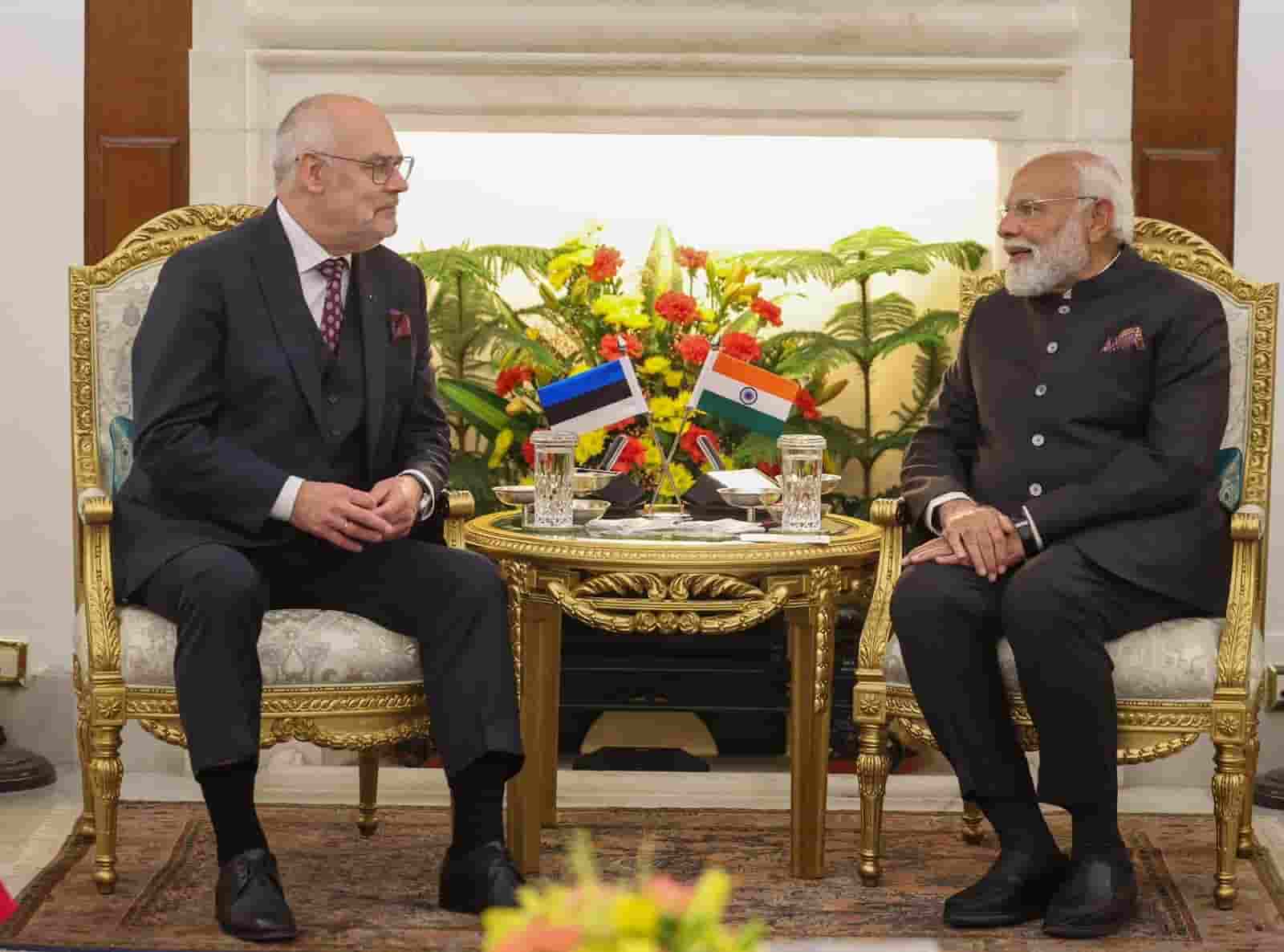
President Alar Karis, the Head of State of Estonia, concluded a significant official visit to India on February 19, 2026, underscoring deepening ties between the two countries across diplomacy, trade, digital cooperation, education and cultural exchange. The discussions and engagements during the visit reflected shared democratic values, mutual interest in technology-led growth and a growing emphasis on people-to-people links.
This visit marked a high-profile diplomatic engagement that elevated relations between India and Estonia — both of which are democracies with strong commitments to digital innovation, open governance and strategic multilateral cooperation.
Official Welcoming and High-Level Meetings
President Alar Karis was received at Rashtrapati Bhavan by President of India Smt. Droupadi Murmu, in a ceremony that reaffirmed the importance both nations place on their bilateral relationship. The ceremonial reception, followed by formal talks, set the tone for substantive discussions on a broad agenda of cooperation.
In their meeting, President Murmu and President Karis reviewed ongoing collaboration, expressed satisfaction with the growing momentum of bilateral ties, and identified new avenues for future engagement. Both leaders spoke of shared democratic principles, respect for sovereignty, and the potential for deeper cooperation in emerging sectors.
Strategic and Technology Cooperation
Estonia is known globally for its success in digital governance, cybersecurity and e-services, and these areas took centre stage during the visit. India and Estonia discussed cooperation in:
- Digital infrastructure and e-governance models
- Cybersecurity partnerships
- Data governance frameworks
- Digital economy initiatives
India shared its experience with large-scale programs such as Aadhaar and DigiLocker, while Estonia showcased best practices from its e-Estonia ecosystem — widely regarded as one of the most advanced digital societies in the world.
Both sides expressed interest in knowledge exchange and joint initiatives that could benefit public service delivery, innovation pipelines and digital skill development.
Economic and Trade Engagement
Bilateral trade and economic cooperation were key components of the discussions. While overall trade volume between India and Estonia has remained modest compared to India’s larger European partners, both nations affirmed a desire to broaden commercial links.
Estonian companies operating in fields such as information technology, clean energy solutions, precision engineering and logistics services were identified as potential partners for deeper engagement with Indian enterprises. Similarly, Indian firms were encouraged to explore opportunities in the Estonian market, particularly in high-technology and service sectors.
Both countries agreed on the need to further institutionalise trade facilitation mechanisms, reduce barriers and foster business dialogue through joint economic forums.
Education, Culture and People-to-People Links
The Presidents highlighted the importance of educational and cultural exchanges as core pillars of bilateral engagement. India and Estonia reaffirmed their commitment to expanding academic collaborations, student mobility programs and cultural showcases that deepen understanding between their citizens.
Emphasis was placed on supporting:
- University partnerships
- Research collaboration in science and technology
- Student exchange schemes
- Cultural festivals and artistic collaborations
These initiatives were seen as vital for building stronger long-term ties, especially among young professionals, innovators and academics.
Multilateral Cooperation and Shared Values
India and Estonia also explored cooperation at the United Nations and other multilateral forums. Both countries reiterated their commitment to democratic norms, rule of law, peaceful resolution of disputes and inclusive development.
There was agreement on enhancing joint efforts on global issues such as climate change, sustainable development, digital governance norms, and secure cyberspace regulations.
Joint Statement and Future Roadmap
At the conclusion of the visit, both leaders issued a joint statement reaffirming their intent to broaden cooperation across multiple domains, including:
- Digital transformation and cybersecurity
- Economic and trade linkages
- Education and cultural exchange
- Multilateral engagement and strategic dialogue
The statement also expressed mutual respect for each other’s development models and acknowledged the importance of continued high-level visits and institutional dialogue mechanisms.
Significance of the Visit
President Karis’s visit to India in February 2026 carries strategic significance on several fronts. India’s engagement with Estonia — a small but highly innovative member of the European Union — reflects New Delhi’s broader approach to building partnerships based on shared technological and governance priorities rather than solely on scale.
For Estonia, strengthening ties with India provides enhanced access to one of the world’s fastest-growing major economies and offers opportunities to participate in collaborative initiatives in technology, education and strategic innovation. Estonia’s expertise in digital governance was highlighted as a complementary asset to India’s own digital transformation journey.
The visit also reaffirmed that India’s foreign policy priorities extend beyond traditional geopolitical partnerships to include innovative, technology-driven countries positioned for long-term global impact.
As bilateral engagement moves forward, both sides signalled their intention to operationalise the discussions through focussed working groups, expert exchanges and public-private cooperation platforms that translate high-level commitments into actionable outcomes.